
Prospect Magazine
I spoke with Ellen Halliday, Prospect’s deputy editor, for a thoughtful essay on climate risk and AMOC collapse. Read it here: https://www.prospectmagazine.co.uk/world/environment-news/climate/72586/is-a-deep-freeze-coming

Interview: Meet the Farmers
I had a great time talking with Ally, Sophie, and ffinlo about food, farming, and security.
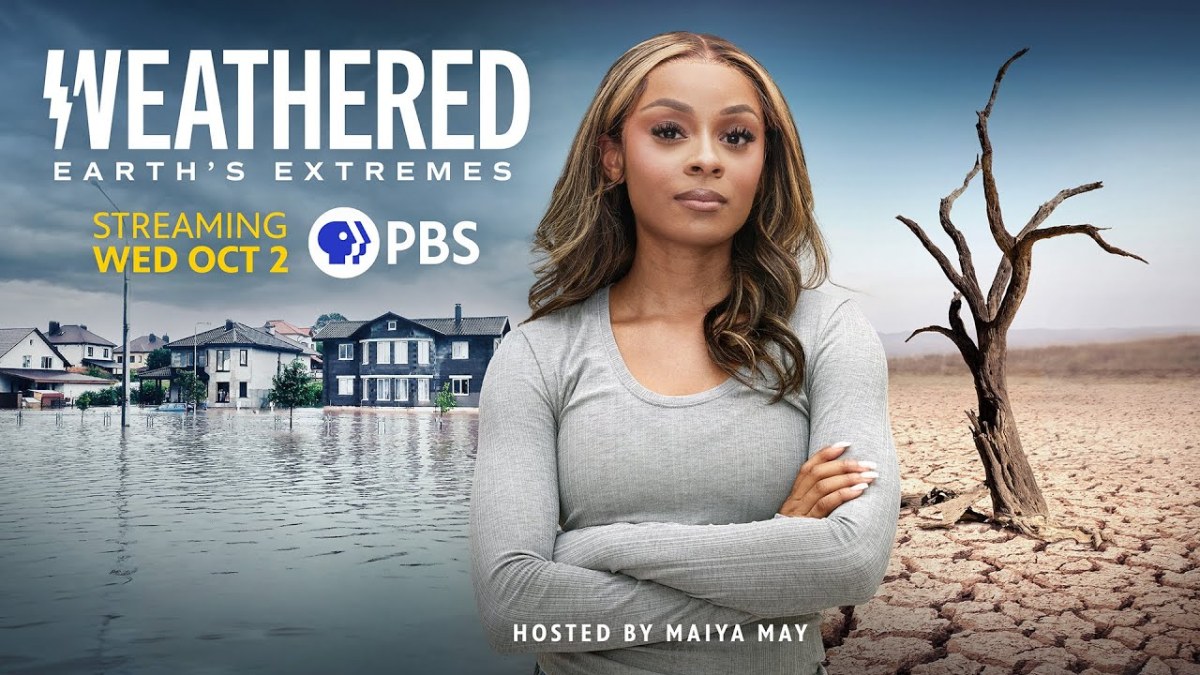
Interview: PBS Weathered, part 2
In the second of two episodes, I spoke with PBS’s Weathered about how to navigate the escalation of climate-driven instability.
Interview: Washington Post
I spoke with Chico Harlan about the risk of AMOC collapse and how this is increasingly being considered a national security issue in the Nordic region. Read the piece here.

Coverage: The Guardian
I was quoted in an article in the Guardian about a new report on the inadequacies of economic modelling of climate risk. Read it here.
Interview: PBS Weathered, part 1
In the first of two episodes, I spoke on PBS’s Weathered about derailment risks and worst-case climate scenarios.

Interview: NPR
I spoke with Lauren Frayer at NPR about the risk of a shutdown of the Atlantic Meridional Overturning Circulation (AMOC). Listen here.

Interview: We Don’t Have Time
In an interview after the UK National Emergency Briefing, I spoke with Nick Nuttall about the work of the Strategic Climate Risks Initiative.

Interview: BBC
I spoke with on BBC News about government’s climate plans and President Trump’s claims in that climate change is a ‘con job’. Watch the clip here.

Interview: Novara Media
I spoke with host Michael Walker about the latest state of climate politics and policymaking.

Interview: New Scientist
I spoke with the New Scientist for an article on the upcoming UN climate COP in Brazil.

Interview: The Dial
I spoke with the Dial for a piece exploring: What’s the Point of a Global Climate Target?

Interview: The Times
I spoke with The Times for an article covering the run-up to COP30: Climate change talks under fire as Cop30 gathers in Brazil

Panel: How should the world confront climate derailment risks?
I chaired a panel event at Chatham House exploring how to tackle derailment risks, with James Dyke, Emma Howard Boyd, Tad Homer-Dixon, and Kate Mackenzie.
Interview: The Ecologist
I spoke with the Ecologist about an SCRI report on derailment risk. Read the piece here.
Interview: Wicked Problems
It was pleasure to go back on the show, this time to talk about the Overshoot podcast.
Interview: The Times
I was quoted in the article – ‘No 10 blocks report on impact of rainforest collapse on food prices’ – which covered the UK government’s veto on the release of the “global ecosystem assessment” report, which examined the ramifications of global ecosystem collapse on security.

Interview: The Economist
I spoke with the Economist for an article on how “Earth’s climate is approaching irreversible tipping points,” which highlights the growing body of evidence on how close the planet is to critical thresholds.

Interview: Bloomberg
I spoke with Bloomberg’s Olivia Rudgard and CDP’s Sherry Madera about the 1.5C global climate target.

Panel: Innovation Zero
I spoke at the Innovation Zero main stage on climate change and national security, along with Dr Hugh Montgomery and Lt. Gen. Richard Nugee.
Interview: GARP climate risk podcast
I had a great time talking with Jo Paisley about 1.5C and how to approach the new climate reality above it.
Interview: The Times
I spoke with Ben Spencer about the challenges from the world overshooting 1.5C and how to respond. Read the piece here: https://www.thetimes.com/uk/environment/article/climate-change-adaptation-decarbonisation-times-earth-93jln78vd
Interview: Your Brain on Climate
I had a great time talking with Dave Powell about climate risks, worst cases, and how to navigate the new climate reality.
Interview: Wicked Problems
James Dyke and I spoke with Richard Delevan about derailment risks and more. Listen through the link below

Interview: Politico
I spoke with Charlie Cooper at Politico about how governments should be ‘thinking the unthinkable’ on climate risk, including tipping points. Read it here: https://www.politico.eu/article/wanted-climate-early-warning-system-for-the-end-of-the-world/.

Interview: Costs Pile Up As Climate Change Adds $600 Billion In Insurance Losses
I was interviewed by David Vetter at Forbes about risks to the insurance industry from climate change. You can read the article here. “Because insurance impacts are mounting and because we don’t have an insurance system built for the way that climate change is evolving, this dynamic is only going to get much worse,” Laybourn…
Interview: Macrodose
I spoke with James Meadway about derailment risk.

Interview: Organising the Future
I was interviewed by Andrew Parry, Head of Investments at J O Hambro Capital Management and Regnant, on the Organising the Future podcast. We talked about how climate change pose a threat to national security, the cascading impacts of climate change on global systems, and why current economic models are inadequate for assessing risks.

Interview: Radio Ecoshock
I spoke with Alex at Radio Ecoshock about climate tipping points and the blind spots in government risk assessments. You can listen to the interview here: https://www.ecoshock.org/2024/11/amoc-freezing-europe-more-likely-despite-global-heating.html.
TED Countdown: 1.5° Overshoot – risks and new dilemmas
Dr James Dyke (University of Exeter) and I led a workshop at TED Countdown in Brussels. The majority of climate scientists no longer believe we can limit warming to 1.5°C and efforts to do so now depend on the concept of overshoot, which is increasingly relying on carbon removal to lower temperatures by 2100. What…
Interview: The Times
I spoke with Ben Cooke about the blind spots in how governments assess climate risks, with a particular focus on the potential collapse of the circulations in the Atlantic Ocean. Read it here: https://www.thetimes.com/uk/environment/article/amoc-collapse-shutdown-climate-change-times-earth-lps5532hd.

Interview: Andrew Marr, LBC
I spoke with Andrew Marr about the blind spots in our understanding of climate risks, including the potential collapse of circulations in the Atlantic Ocean. Watch it here: https://www.lbc.co.uk/radio/presenters/andrew-marr/tonight-with-andrew-marr-16-10-24-watch-again/.

Interview: Metro
I was interviewed by Jen Mills for the UK’s Metro newspaper about blind spots in national security assessment and planning on climate risk and how to respond, including the risks posed by the potential collapse of circulations in the Atlantic Ocean. Read is here: https://metro.co.uk/2024/10/09/uk-flying-blind-towards-looming-risk-caused-little-ice-age-21750928/.

Coverage: Farmers Weekly
I was quoted in an article in the UK’s Farmers Weekly on threats to food security from escalating climate risk – and the blind spots in how governments assess and manage these risks. The article is here: https://www.fwi.co.uk/news/uk-climate-report-warns-of-food-security-risks-and-national-threats.
Quote: UK’s £22bn carbon capture pledge follows surge in lobbying by fossil fuel industry, records show
I was quoted in a Guardian article about the UK government’s approach to carbon capture and storage (CCS) and the power of the fossil fuel industry. Fossil fuel companies often have the engineering knowhow to build CCS projects, so the government naturally has to meet with them. But that might create a risk whereby these…
Interview: DeSmog, carbon capture and storage
I was interviewed by DeSmog as part of their investigation into lobbying by fossil fuel companies to influence government policy and carbon capture and storage. Read it here: https://www.desmog.com/2024/10/07/uks-22-billion-carbon-capture-pledge-follows-surge-in-lobbying-by-fossil-fuel-industry-records-show/.

Green Gathering: The Climate Blindspot – What Government Risk Assessments Miss
I spoke at the Green Gathering festival in summer 2024.
Quote: Bloomberg Green
I spoke with Olivia Rudgard at Bloomberg about the role of games in understanding and acting on climate risk. “Games are a great way to help those people, and wider society, grapple with the challenge to their imagination of something that has never happened before. The things that could happen if we don’t deal with…
Leadership in the climate and ecological crisis: UCL lecture
I gave a lecture at the 2024 Sustainability Leadership Conference at University College London.

Global Tipping Points Report 2023: Discussion with lead authors
The Global Tipping Points Report was launched on 6th December 2023 and provides an authoritative assessment of the risks and opportunities of both negative and positive tipping points in the Earth system and society. In this webinar several Section Leads presented key insights from this report. Speakers:

The cost of inaction: How tackling climate risk fuels economic prosperity
I chaired a panel at Labour Party conference 2023 on the complex financial risks resulting from the climate crisis. It was hosted by the Institute for Public Policy Research (IPPR) and the Faculty and Institute of Actuaries. Speakers:

Quote: The Telegraph
I spoke with the Daily Telegraph about how people in the UK should think about China’s record on the climate crisis. While China is a huge emitter, it is also a world-leader in clean technologies. It is installing more renewables in a given month than others countries achieve in years. This matters for the environment…

Interview: Times Radio
I spoke with Times Radio about leadership on the climate crisis and comparisons with the mobilisations behind WWII.

Interview: How hot will London get as global temperatures rise?
I spoke with the Evening Standard about the impacts of climate change on London and what Londoners can do.
Panel: How to train future leaders
I chaired a great panel event with staff and students at Exeter University and Sarah Mukherjee, the CEO of IEMA.
Event: Stories of 1.5°C: Dead or alive?
I chaired a panel event exploring the challenges to the plausibility of the 1.5°C global climate goal, building on a report I co-authored, published by IPPR and Chatham House. High profile voices are arguing that the global goal of limiting climate change to 1.5° C is already lost. Yet limiting to 1.5°C is still physically possible…

Interview: Financial Times
I spoke with Attracta Mooney at the FT about the 1.5C climate target. You can read it here.
Interview: The Guardian, World risks descending into a climate ‘doom loop’, warn thinktanks
I was interviewed by Damian Carrington about an IPPR and Chatham House report, for which I was the lead author.
Interview: Washington Post
I was interviewed by the Washington Post about an IPPR and Chatham House report, for which I was the lead author.

Interview: Radio Ecoshock
I spoke with a syndicated radio show about a recent IPPR and Chatham House report. You can listen here: https://www.ecoshock.org/2023/03/avoiding-the-doom-loop-in-the-age-of-crisis.html.
Interview: BBC World Service
Over the last few years, I’ve been helping develop a new board game on the climate crisis. It’s called Daybreak. We played it with the BBC World Service. Listen to the podcast below.

Panel: Climate Change and (in)Security Project conference
I spoke about how to increase climate security literacy on a panel at the CCIP conference.
Panel: For Frack’s Sake
I spoke at the Battle of Ideas on fracking and energy.

Interview: Planet Critical – What We Need From COP27
Rachel and I had a chat about the opportunities in crisis moments throughout history. We explored how our current fiscal ideologies, including our relationship to debt, impedes necessary climate action around the world whilst hobbling the global south’s capacity to respond to increasing catastrophes.
Interview: Julia Hartley-Brewer, TalkTV
I spoke on Talk TV about the energy crisis and the win-win-win-win-win of insulation.
Interview: PTV interview on COP27
I spoke with the Pakistani news broadcaster about how climate impacts in one place have consequences further afield.

Interview: Nigel Farage, future of net zero
I tried to explain how becoming less dependent on deadly and volatile fossil fuels can benefit us all.

Interview: Collective Services are Green Services
I spoke to the Social Guarantee about how collective services are more sustainable.

Panel: Jeremy Kyle, Talk TV
We spoke about, you guessed it, fracking.
Interview: Talk TV on water companies
I spoke about how the privatised water system is failing us.
Panel: Trying to have a ‘discussion’ with David Starkey
He thinks that in ‘tribal societies…you cannot have a modern, developed economy’ and that we can’t allow modern medicine to go into such societies as they will then have a larger population, which they will fail to sustain.
Event: Beyond ‘Hopeium’ and ‘Doomism’, Chatham House
As part of London Climate Action Week (LCAW), I chaired a fantastic panel that explored how to maintain focus and attention on reducing emissions even as horrifying climate impacts grow, featuring: Nina Jess, Schwarzman Academy Fellow, Environment and Society Programme, Chatham House Dr Jesse Reynolds, Executive Secretary, Global Commission on Governing Risks from Climate Overshoot…
Event: Blavatnik School of Government, University of Oxford
Part of an event on “Governing in the climate crisis: how should future leaders prepare?”, I explored how the environmental crisis is creating a more chaotic – or ‘turbulent’ – world, what challenge that poses for the sustainability transition, and how emerging leaders need to be supported in their journey to senior leadership under these…

Event: Faculty for a Future launch
I joined the launch event for this new organisation to talk about complex, cascading risks.

Interview: #Britain Debrief with Ben Judah, Atlantic Council
Ben and I had a chat about how fossils fuels fuel Putin and the climate crisis, both of which are drivers of global insecurity, and what we can do the tackle them simultaneously.
Event: How can future leaders prepare for an environmentally-destabilized world?
At this Chatham House Sustainability Accelerator event, I was joined by an excellent panel to discuss the huge challenges facing future leaders and what we can do about it: Ana Yang, Executive Director, Sustainability Accelerator, Chatham House May Boeve, Executive Director, 350.org Dr Kate Guy, Senior Advisor, U.S. Department of State Gadir Lavadenz, Global Coordinator, CBD Alliance Dr Daniel…
Interview: Nigel Farage, GB News on COP26
I spoke with Nigel Farage on GB News about the importance of COP26 and how these years are the crunch time for climate action.
Interview: Nigel Farage, GB News on gas prices and climate change
I spoke with Nigel Farage on GB News about gas prices, how the green transition will mean we’ll become less reliant on high prices, and how government could have insulated homes and made us less reliant already.
Interview: Olive Oil Times
I was interviewed by Paolo DeAndreis at the Olive Oil Times about the joint editorial from 200+ health journals on climate change, of which I was a co-author. Read the interview here: https://www.oliveoiltimes.com/world/editors-from-200-health-journals-warn-climate-change-is-creating-global-health-crises/98679.
Interview: Nigel Farage, GB News on the IPCC report
I spoke with Nigel Farage on GB News about the IPCC’s latest report and how it’s a ‘code red’ for humanity.

Seminar: Into the Storm – Global Systems Institute, University of Exeter
24th May 2021 I gave a talk at the Global Systems Institute at the University of Exeter that explored the grand strategy for re-stabilising the natural world – or lack thereof – and how this will have to increasingly contend with the destabilising consequences of the environmental emergency. Check out the video below and read…
Interview: It’s Freezing in LA!
Mat and I had a great chat with Martha Dillon at It’s Freezing in LA! about Planet on Fire – which they also reviewed. Check it out: https://www.itsfreezinginla.co.uk/post/a-primer-for-ecosocialism

Interview: Reasons to be Cheerful with Ed Miliband and Geoff Lloyd
Mat and I chatted to Ed and Geoff about Planet on Fire and the dream of a better world as well as the nightmare into which we head.

Event: Planet on Fire at the World Transformed
We launched Planet on Fire at an online event with the World Transformed, chaired by Grace Blakeley.
Interview: Novara Media Downstream
Mat and I joined Aaron Bastani on Novara Media’s Downstream to talk about Planet on Fire.

Interview: A World to Win
Mathew Lawrence and I joined Grace Blakeley to discuss Planet on Fire on the A World to Win podcast.
Event: IPPR launch of Planet on Fire
We launched Planet on Fire at an IPPR webinar and were joined by Fatima Ibrahim and a lively audience.

Interview: The Social Review
Mat and I joined Joe Hamm to talk about Planet on Fire on the Social Review podcast.

Interview: The Owen Jones Show
Mat Lawrence and I spoke with Owen Jones about Planet on Fire, how we face an overall environmental emergency, it’s caused by (deeply unjust) economic systems over individuals – so our response can and must be political and transformational.

Interview: The Nomiki Show
I spoke to Nomiki Konst on the Nomiki Show about the environmental emergency, the role of economic systems in driving the disaster, and how our response can and must be political and transformation. I joined by Mat Lawrence and we also spoke about our new book, Planet on Fire.
Foul is no longer fair: Towards an economics for planetary stability
Talk to the Council for the Human Future conference, 21st March 2021 It is never hard to find commentary on why we are collectively failing to address the accelerating environmental emergency. ‘We’re not wired to empathize with our descendants,’ laments a psychology professor in the Washington Post. ‘We lack courage,’ concludes President Macron to world…

Interview: Blick
I was interviewed by Fabienne Kinzelmann at the Swiss paper Blick about the environmental crisis and how we best respond (link is not in English): https://www.blick.ch/ausland/physiker-und-wirtschaftswissenschaftler-laurie-laybourn-langton-31-ueber-die-waldbraende-in-kalifornien-greta-und-die-schweiz-beim-klima-verlieren-wir-die-kontrolle-id16111422.html

Presentation: at The Great Unraveling? Confronting Accelerating Environmental and Social Stresses.
I gave a presentation before a panel discussion as part of the Great Unraveling? conference, organised by the Post Carbon Institute and Anthropocene Actions.
Video: What now? A personal reflection on the future as part of the Great Unraveling? series
In this final video of the series, I challenge the false binary beliefs that tell us we still have time to prevent crises like climate breakdown or that it’s too late and hopeless, and argues strongly for honest appraisal of our predicament and urgency in responding to the interconnected environmental and societal challenges we face…
Video: Emotional and Psychological Resilience to Current and Looming Crises. Leslie Davenport
More and more individuals and communities are struggling to cope with the psychological and emotional toll of environmental and social systems gone awry, with this trend likely to get more severe in the coming years and decades. In this episode of the “Great Unraveling?” series, Leslie Davenport joins me to explore the emotional and psychological…
Video: The Cycles of Societies and Where We Find Ourselves. Interview with Daniel Hoyer
Around the world today you see societies in varying degrees of stability and instability. Looking back throughout history, we may be able to identify certain patterns in how societies develop, change, fall into crisis, and evolve into new phases of development. In this episode of the “Great Unraveling?” series, Daniel Hoyer joins me to explore…
Video: The Critical Need for and Challenges Facing the Energy Transition. Interview with Richard Heinberg
Access to energy is of foundational importance for societies, but constraints on our abilities to meet societies’ energy requirements are growing. Foremost among them is the pressing challenge of transitioning to a zero-carbon energy system. In this episode of the “Great Unraveling?” series, Richard Heinberg joins me to explore the crucial role of energy in…
Video: The Rise of Far-Right Counter-Revolution around the World. Interview with Walden Bello
Regressive political movements have increased in size and power over the last decade, with dissatisfaction with the status quo and political conflict on the rise. In this episode of the “Great Unraveling?” series, Walden Bello joins me to explore the factors behind the rise in political fragmentation in both the global south and global north,…
Video: Growing Economic and Environmental Inequality. Interview with Jason Hickel
Despite prevalent claims that economic well-being has been on the rise in recent decades globally, the post-colonial period has been one of increasing, not decreasing, inequality between the Global North and Global South. Growing economic and social inequality is a driving factor in a range of major problems, from poor health to political fragmentation, but…
Video: Geopolitical Balance in an Increasingly Unstable World. Interview with Christine Parthemore
The coronavirus pandemic is impacting the global geopolitical balance, the shifting of which was already underway. As ever, this opens up new threats and opportunities for peace and security across the world. In this episode of the “Great Unraveling?” series, Christine Parthemore joins me to discuss how growing destabilisation, in part driven by the worsening…
Video: What’s Driving the Migration of Humans and Other Species? Interview with Sonia Shah
Over 70 million people have been forcibly displaced worldwide, with large increases in recent years having been driven by a complex mix of factors, including environmental shocks, conflict, and economic crisis. As ever, the vast majority of these people stay within countries or regions and suffer. Meanwhile perceptions of migration — which are often incorrect…
Video: Fragility in Economic Systems. Interview with Nate Hagens
Ten years after a financial crisis, the inherent instability of financial markets has been further confirmed by the coronavirus pandemic, while fragilities in wider economic systems have been exacerbated, from precarious work to the consequences of high levels of debt in the global south and across the corporate sector. In this episode of the “Great…
Video: Fragility in Food Systems. Interview with Raj Patel
Food systems around the world are dependent on supply chains that connect the fate of consumers in one region to producers in another. A range of major problems are already buffeting these systems, from the chronic failure to provide adequate nutrition to growing environmental shocks. In this episode of the “Great Unraveling?” series, Raj Patel…
Video: Fragile and Interdependent Systems in a World of Worsening Crises. Interview with Nafeez Ahmed
The coronavirus pandemic has exposed the fragilities and interdependencies of the world’s complex socio-economic systems, and the challenge of predicting and planning for known threats, let alone the unknown. In this episode of the “Great Unraveling?” series, Nafeez Ahmed joins me to explore some of these dynamics and what they might mean for how we…
Video: The Relationship Between Imperialism, Racism, and the Environmental Crisis. Interview with Asad Rehman
The expansion of colonial empires and the emergence of a globalised economic system brought about a rapid increase in the destabilisation of local and global environments, as well as the exploitation and destruction of indigenous peoples. In doing so, they created structures and dynamics that exist to this day. In this episode of the “Great…
Video: Who’s Already Suffering the Consequences of the Environmental Crisis? Interview with Nnimmo Bassey
The consequences of environmental degradation have impacted people across the world for hundreds of years. In recent decades, the negative social, economic and health impacts of global environmental problems have fallen disproportionately on those least responsible. In this episode of the “Great Unraveling?” series, Nnimmo Bassey joins me to explore how environmental destruction has impacted…
Video: How Bad Is the Wider Environmental Crisis? Interview with Johan Rockström
Human destabilisation of the environment encompasses a range of critical natural systems and processes. In this episode of the “Great Unraveling?” series, Johan Rockström joins me to set climate breakdown within the full picture of overall environmental breakdown, explore destabilisation of natural systems, and the consequences. Professor Johan Rockström is a world-leading global sustainability scientist…
Video: How bad is the climate crisis? Interview with Michael Mann
Average global surface temperatures have passed 1.1º Celsius above pre-industrial levels. In this episode of the “Great Unraveling?” series, Michael Mann joins me to explore the current status of the climate crisis and the unprecedented minefield we enter as we head to and exceed 1.5º Celsius. Dr. Michael E. Mann is a world renowned expert…
Video: Introduction to the “Great Unraveling?” Series
Here I introduce the Great Unraveling? interview series: its purpose, what topics will be covered, and why we’re initiating this timely discussion. Over summer 2020 I conducted brief interviews with some of the world’s foremost experts on a broad range of environmental and societal challenges, to set a foundation for understanding the accelerating and interrelated…

Panel: Changing Behaviour, The Happold Foundation
I spoke at a panel event on the environmental crisis organised by the Happold Foundation.
Keep up to date
Get news on my latest research, writing and speaking by subscribing below
 Laurie Laybourn