
As part of the Strategic Climate Risks Initiative, we launched a new Substack blog: the New Climate Reality. Here is the first post.
—
The climate crisis is entering a new chapter.
It has two central features, two accelerating but conflicting trends.
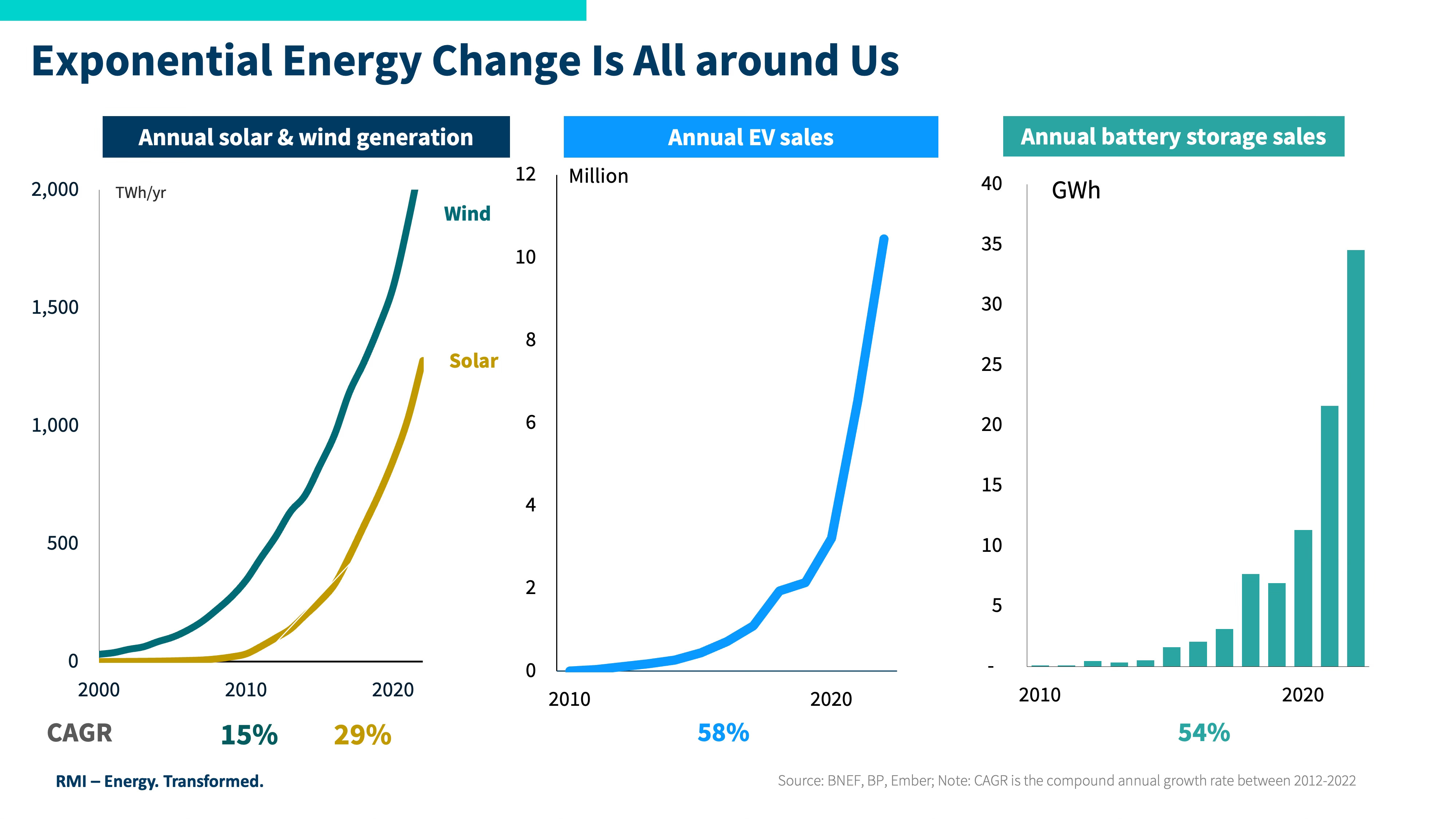
On the one hand, climate action is speeding up. Decades of clean energy investments are paying off. The rollout of renewables is reaching exponential levels, beating fossil sources around the world. Climate activism now extends from board rooms and courtrooms to cabinet tables and kitchen tables.
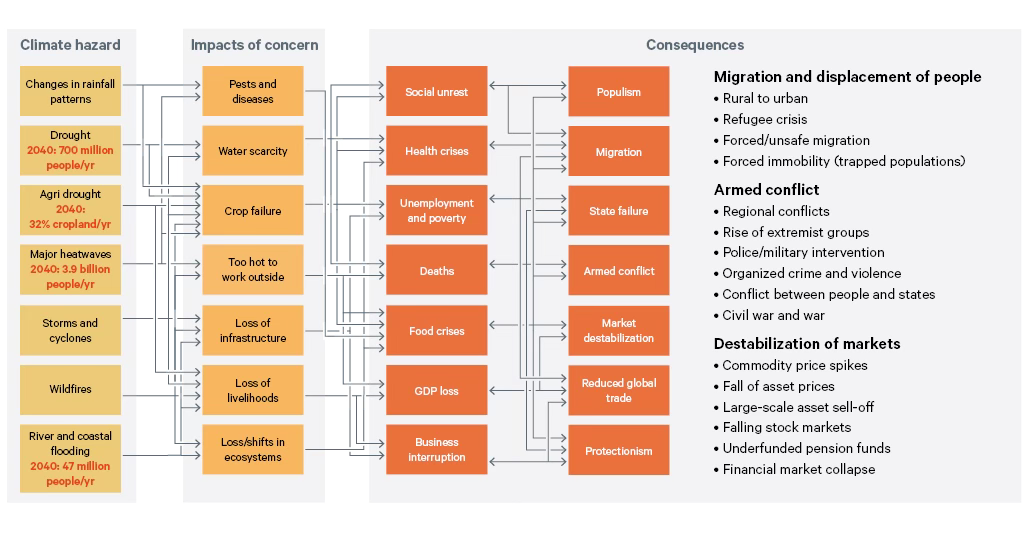
Yet on the other hand, climate impacts are hitting at the harder and soonest end of what was expected. Their destabilising consequences are accelerating, from inflationto fear. While climate action is speeding up, it still hasn’t been fast enough. So, the global temperature rise is expected to soon breach the 1.5C limit, escalating systemic shocks and increasing the risks of catastrophic events, like the triggering of tipping points. The era of globally-dangerous, non-linear climate consequences has begun.
The increasing collision of these two trends – of climate action and climate consequence – is a central feature of the new chapter of the climate crisis.
This is the new climate reality, the focus of this Substack.
The new reality doesn’t mean it’s ‘game over’, that the world has ‘lost’ the fight against climate change. Much is and will increasingly be lost, of course. But binary thinking – manifest in the win/lose climate narratives that we often hear – isn’t appropriate for what is now happening.
An increasingly climate-destabilised world could spur greater action, as the enormity of the problem is more widely felt. But it could also derail action, as we become increasingly distracted and overwhelmed by compounding shocks and counter-productive reactions. In reality, it will be a complex combination of both.
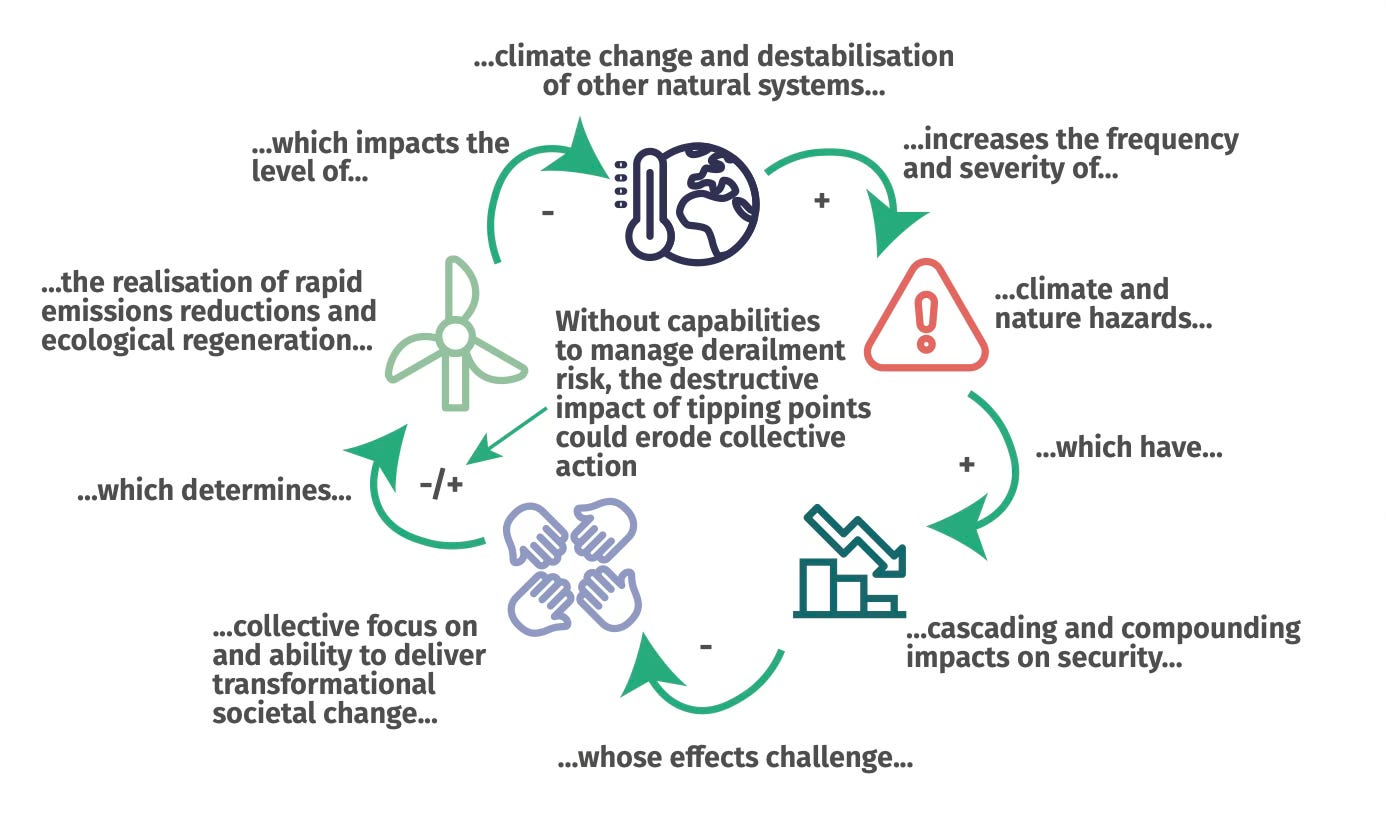
The central challenge of the new climate reality is to navigate this complex strategic context. To ensure that the escalating consequences of climate change do not undermine – and instead reinforce – action to tackle the causes.
Yet we have found that many organisations and communities do not have the insights and tools to understand and act on this challenge. Risk assessments have blind spotson cascading impacts and tipping points. Resilience to current climate impacts is poor, let alone for future shocks. Environmental stories often shy away from the profound challenges to come – and the opportunities therein.
In response, the Strategic Climate Risks Initiative – the initiative behind this Substack – was founded to help fill these gaps. Our work provides the insights and tools to grow capabilities for navigating the new climate reality.
And we’ll share those insights and tools through this Substack.
Some of our projects include:
- Mitigating Derailment Risk: Derailment risk is the risk that the consequences of climate change could get in the way of tackling its causes. We set out the concept in a recent academic paper. We’re now mapping specific examples and developing a mitigation agenda.
- ‘Overshoot!’ (working title): A podcast documentary – aimed at a non-technical audience – on the challenges arising from 1.5C overshoot and how we can navigate these.
- The Climate Policy Creative Fellowship: Supporting storytellers and artists to create policy-impactful narratives that counter derailment risk and set out possibilities for ‘thrutopian’ futures – those that navigate through shades of both utopia and dystopia – and how policymakers can help get there. You can meet your fellows here.
- Resilience Games: Decision-useful risk assessments of nonlinear climate risks that utilise ‘resilience games’ (our version of ‘war gaming’) to play through how to manage these emerging risks.
- Cohort 2040: A trial leadership development programme for mid-career emerging leaders, those likely to be in positions of influence when the cascading risk of climate poses major strategic risks.
- Climate Security Policy Agenda: We’re developing a policy agenda for assessing and managing climate-induced human security threats, as set out in our recent report the Security Blind Spot.
Look out for posts about these projects and what we’re learning. And check out the Strategic Climate Risks Initiative website to learn more.
 Laurie Laybourn